
DNA and cells are linked as cells hold DNA. DNA is the building blocks of the genetic code that makes us who we are. Every organism that lives hasa DNA genetic makeup. Depending on the different organisms, whether they are microscopic bacteria, to the largest animals like elephants and whales, they each have their own version of DNA that gives them the characteristics they hold.


Find out about the history of DNA, including when and how it was discovered, who discovered parts of it, and what we do now we know about DNA and our genome.
Explore the differences between RNA and DNA, how they form and fuse together, what their functions are and more.


Our genes are what make up our characteristics, traits and the way we look. They are based on information gathered from the chromosomes passed down through generations of family.

A haploid cell contains all the information from two sets of chromosomes, also known as a pair. Diploid cells contain one set of chromosome only.
A genotype is the entire collection of alleles, or characteristics, that we have. A phenotype is a collection of characteristics you get from your genotype. If this is confusing, find out more about it here.


Find out about the different types of microscope used in every day science, from the light microscope (you may have seen these at school), to the electron microscope.
There are seven different features that make a living organism, well... alive. This simple way to remember that is here to help you.


We are all different, and so are animals, birds and insects. But why? This is due to variation, which is how we all look different to each other, but also have some similarities.
Find out about the size differences and how each level of organisation within the body help to make up what we use as a living organism.
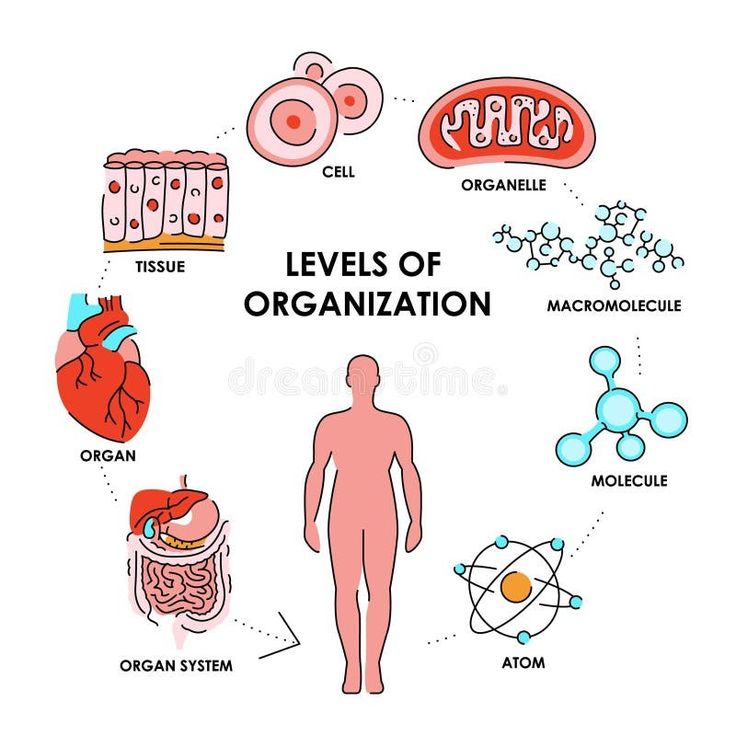

Take an in-depth look at what a eukaryotic cell looks like, what's inside and how it all functions.
Take an in-depth look at what a prokaryotic cell looks like, what's inside and how it all functions.


The different cells in our body have different functions, and some have no function. Find out what they all do and what they look like.
All cells are different sizes due to their function, and what they contain.


How does a cell get the nutrients it needs? How does it move things about and transfer to other cells? It uses a process called active transport.
Stem cells are cells that have no function, until they are required for a function. This can be most cells, and there are different types of stem cells, depending where they are created.


Cells need to reproduce in order to keep us young and healthy. Some cells have a longer lifespan than others, and they need to be replaced with new cells.
There are different methods to moving items to and from cells, including active transport. Cells are clever in that they don't always need energy to move components from one place to another.


There are different genetic conditions that are passed down through family generations that can not be contracted.
Polydactyly is a condition that when born, you are born with an extra appendage. Extra toes or fingers, or sometimes just a little bit of tissue. It can be treated, and often they are removed at birth.


Down's Syndrome is a person that has an extra 23rd chromosome. They have distinctive features, most notably that they have a flat face. They can also have learning difficulties, all which can be helped in early years of life.
A genetic condition that affects the mucus levels in your body, people with Cystic Fibrosis have to be very careful not to get ill, due to it being worse for them. It affects mostly the lungs, but can also affect other organs.


First coined by Dr Harry Turner, Turner syndrome affects mainly females, and is the result of having 1 X chromosome instead of two.
Patau's Syndrome affects babies, and is the result of an extra chromosome 13. Most babies do not survive this condition, and there is no cure for it.


Klinefelter syndrome affects men, and gives them a tall stature, along with other symptoms. It can sometimes go unnoticed, and this is the result of having an extra X chromosome.


Rosalind Franklin was one of four scientists to discover and render the DNA double helix.

An American geneticist, McClintock discovered that chromosomes can shift pattern to activate or deactivate the next one.

Considered the father of modern genetics, Gregor Mendel researched the way dominant and recessive genes worked.


