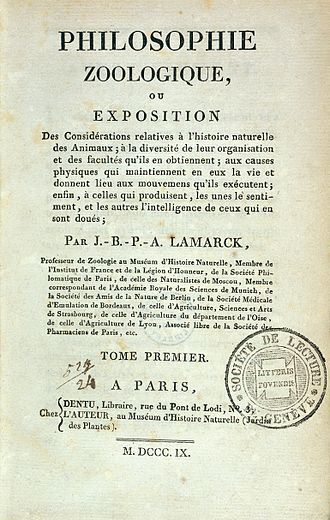
A French naturist, Jean-Baptiste Lamarck also worked on the theory of evolution, like Charles Darwin.
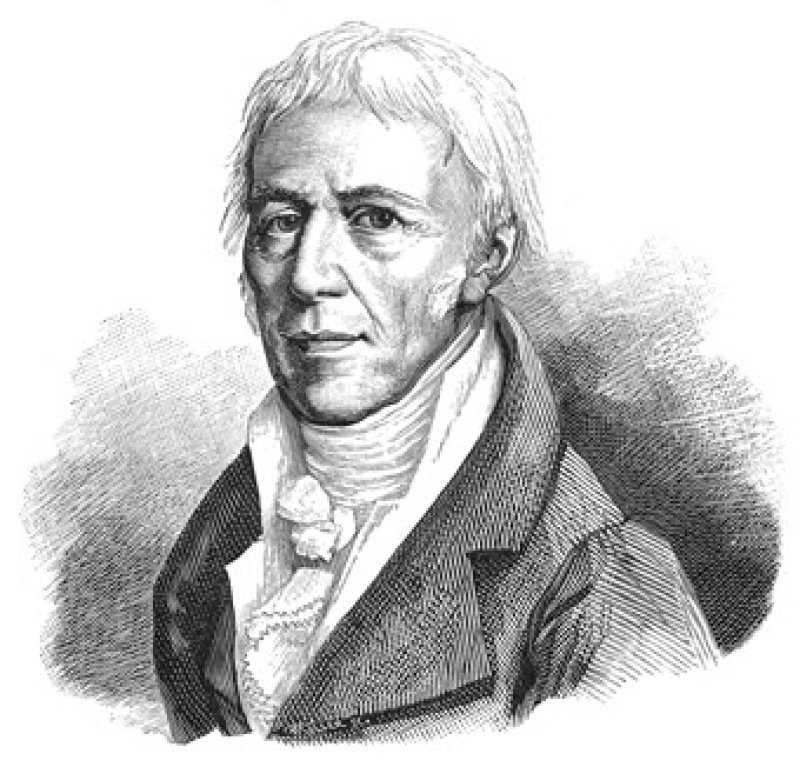
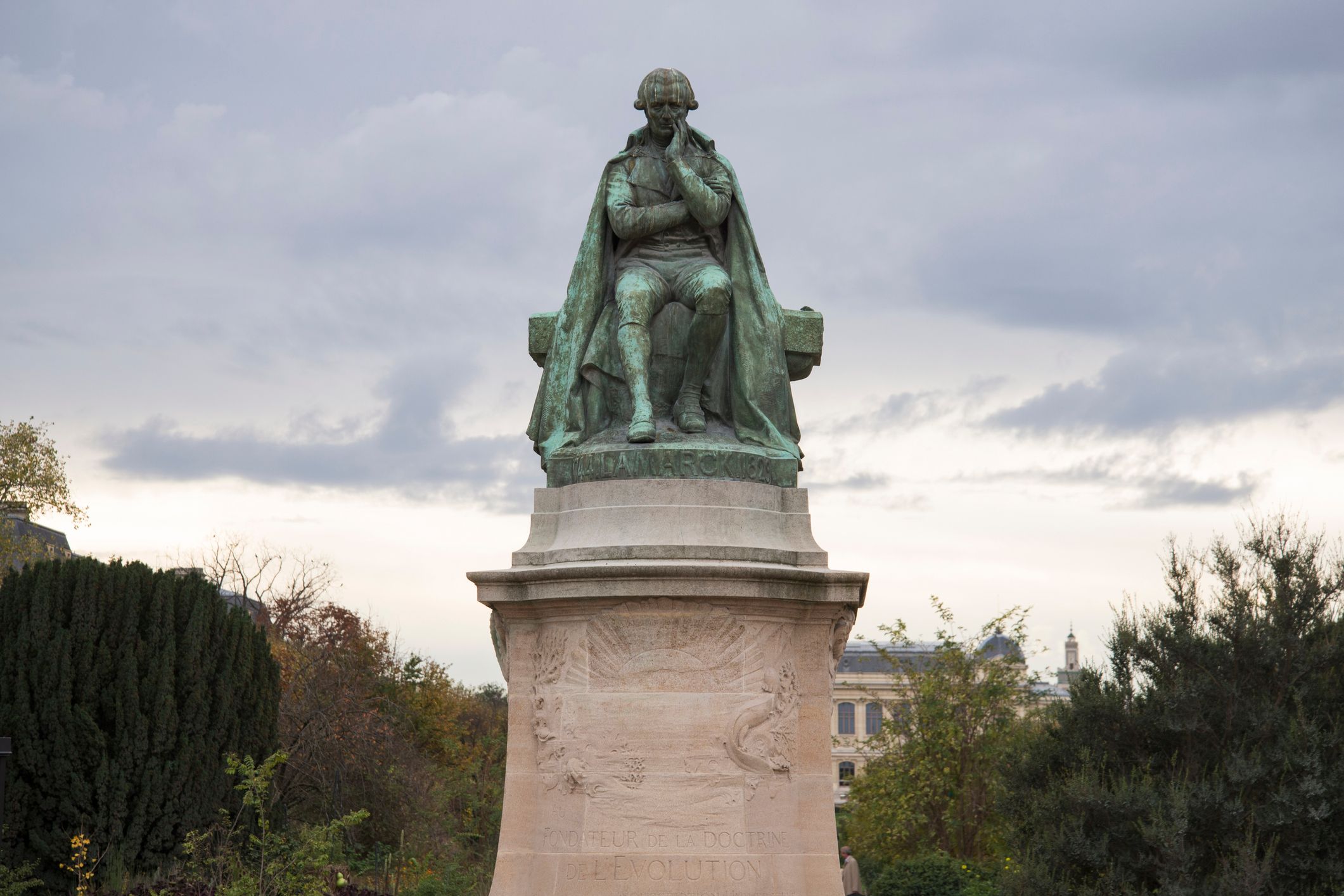
Born: August 1st, 1744 | Died: December 18th, 1829.
Lamarck had theories that have since been debunked, but he theorised that evolution was the result of acquired characters are inheritable.
Born to a family of 10 other children, Jean-Baptiste Lamarck was the son of an aristocratic father. His early years were of a usual nature in school, and when he turned 17, he entered service as a soldier. While in service in the South of France, he became interested in plants. He later turned his focus to becoming a fully-fledged botanist after injuring himself, which forced him to resign in 1768.
Lamarck worked for a bank as a clerk before he pursued botany full-time. It wasn't long after, he published his first works - "la Flore Francais" (French Flora) - in 1778. It was published in three volumes. In 1779, he was made a member of the Academy of Sciences at the Jardin du Roi after a good friend and naturalist called Georges Buffon saw the works.
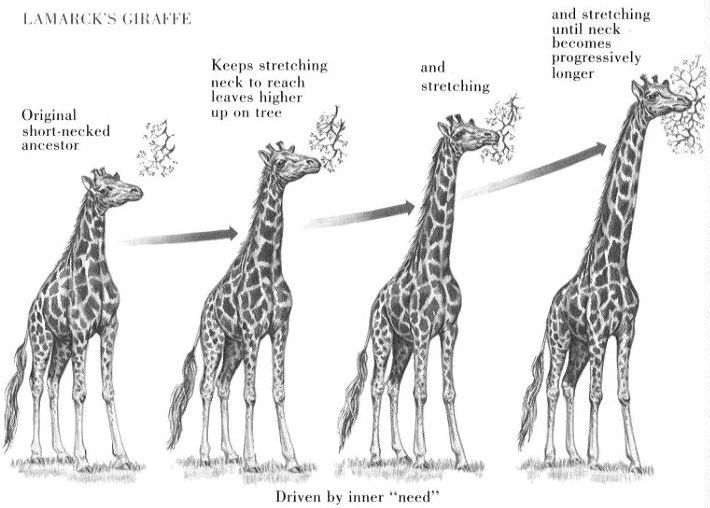
Like Darwin's theory was that species gained characteristics from their parents and changed over time, Lamarck's theory was that the most basic forms of organic development in organisms were the result of spontaneous generation. This was markedly different to Darwin's theory, being that the environment changed the purpose of an organism over time and generations.
While Lamarck's theories were later debunked by other scientists, and also by Darwin's theories which were later accepted, he also provided a broader account of how species change. There was a classification system he had provided, which was rather complex and this was based on the difference of species that "mutated" through the diverse and specific environments that they have been exposed to.
While not specifically true, this theory was the groundwork for Darwin's theories of natural selection.
Lamarck created the term 'invertebrate'. This was the description of animals without a backbone. Upon this, Lamarck started collecting fossils and studied simple species. His daughter helped him to finish his work on these studies, as he became blind.
Lamarck was the first scientist to theorise that all living organisms were built up from smaller, lesser and simpler organisms, including humans.
Lamarck was the first person to coin the term "biology", in 1802. He was one of the first people to be considered a biologist in the modern world of science, along with those that came after (and before) him. The original terms of naturist, naturalist and other names to do with the area of science were retroframed as biologists.
He was also one of the first scientists to figure that adaptation occurred in species to help them better survive in their respective environments.
Jean-Baptiste Lamarck had a total of eight children, across three different wives. His first wife, Marie Rosalie Delaporte, gave him six children before she dies in 1792. They did not marry until she was on her deathbed.
His second wife, Charlotte Victoire Reverdy, gave birth to two children, but died two years after they were married. His third wife, Julie Mallet, did not have any children before she also died in 1819.
There were rumours of a fourth marriage, but nothing has been proven of this. By the time Lamarck died, he was penniless and of his eight children, one was deaf and incapable, another was insane, but one son became an engineer and had children.