
A chemist, physicist and meteorologist that worked with modern atomic theory, but also studied colour blindness.
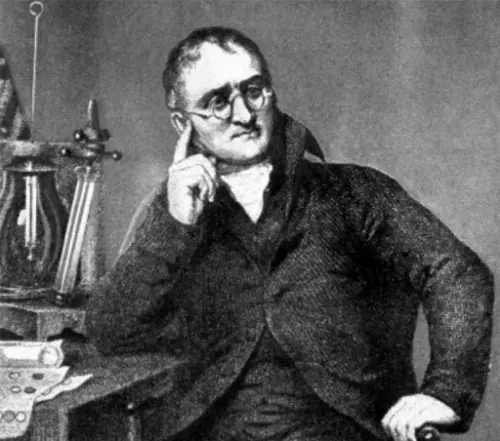
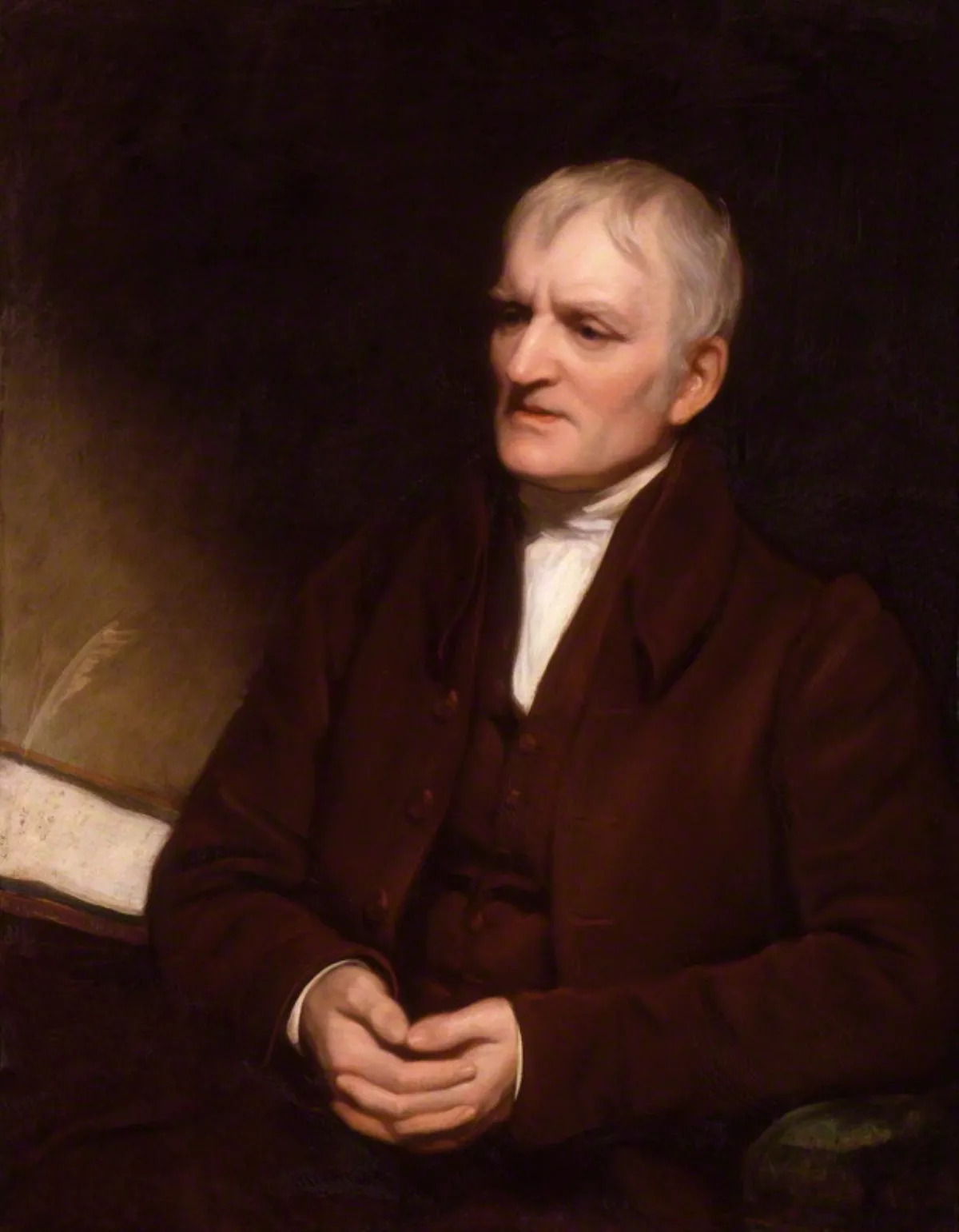
Born: September 6th, 1766, Died: July 27th, 1824.
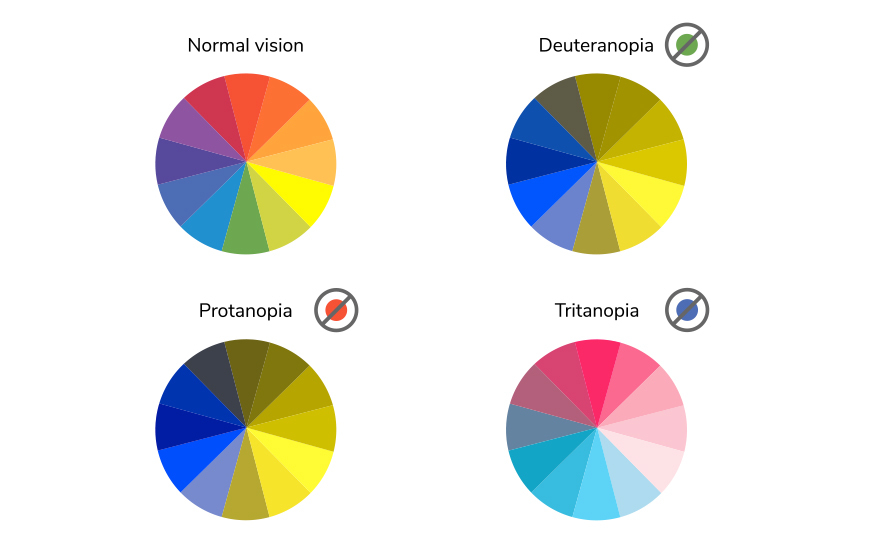
John Dalton and his brother both had colour blindness. John was the first person to figure this out, and also donated his eyes to medicine as a showcase for the condition.
John Dalton was born into a Quaker family of tradesmen. Members of his family were shoemakers, weavers and other trades that were prospering at the time. John attended the Quaker grammar school in Eaglesfield, and when he turned 12, the school was turned over to his older brother, Jonathan. Over the next few years, together they taught approximately 60 students, some of which lived there as boarders.
During 1793, Dalton moved to Manchester, where he would teach mathematics at the New College. With moving, he took proof sheets of his first book, which was a collection of meteorologic topic based on observations made by him and two friends, John Gough and Peter Crosthwaite. This work was published in 1793.
His publication gained him the name of "father of meteorology", and his study showed and proved that there was a scientific goal behind the stars, not just (as they were used for at the time) a mythological and folklore perspective. Dalton was raised in the mountainous region of the Lake District, where he was well-placed to view any phenomena in the sky.
Dalton's view on the mixture of air was that of contemporary views that it was made up of 80% nitrogen and 20% oxygen, and he proved this by defining partial pressure where every constituent in a mixture of gases exerted the same pressure it would have if it had been the only gas present.
Dalton's other discoveries include a paper he released on colour blindness, which was colloquially known as Daltonism for a while. His original theories were met with resistance, but after his death where he donated his eyes, his theory was correct after the autopsy was performed local doctor Joseph Ransome.
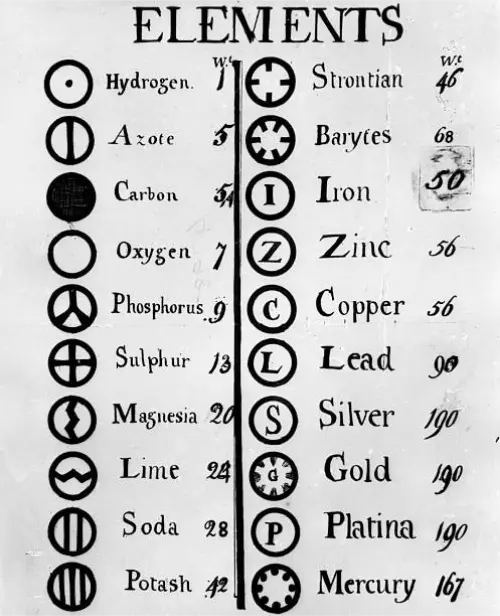
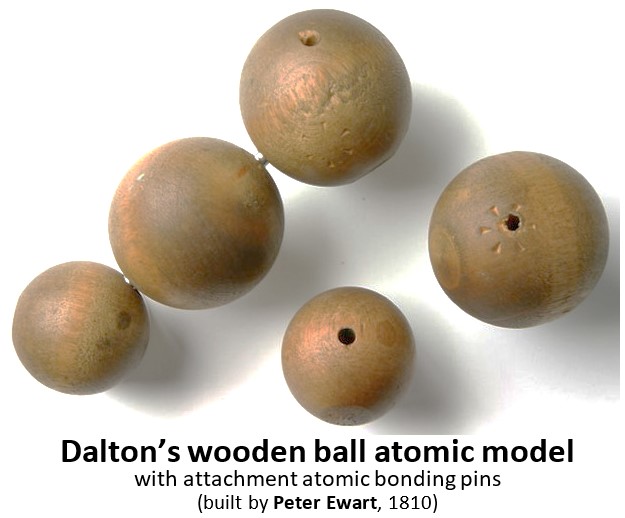
A theory that each element consists of it's own brand of indivisible atom, and that each element had it's own weight, was next on Dalton's list of discoveries. His research into this area helped develop the periodic table of elements later in the 19th century.
Dalton was a keen weather watcher. Over 57 years, he accumulated over 200,000 entries into journals that described the weather daily. His findings through the years included the usual Mancunian wind and rain, along with the aurora borealis.
John Dalton was honoured throughout his lifetime. He was elected one of the associates of the French Academie des Sciences, a Fellow of the Royal Society and their first Royal Medallist.


