


Endocrine system, glands, pituitary, thyroid, hyperthyroidism, hypothyroidism, pancreas, liver, adrenal, testes, ovaries.
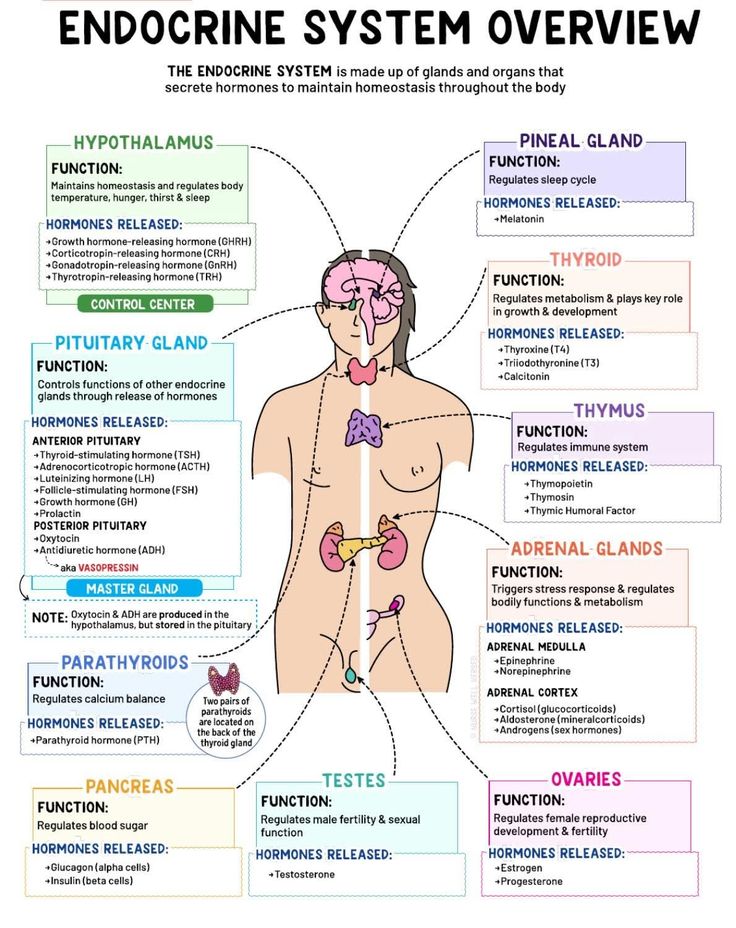

When we grow up, the hormones in our body go rampant. They literally make changes left, right and centre with our body. This can be new hair growth, puberty or any number of other things that can happen. It's all controlled by the endocrine system.
In short, it is a series of glands in our body that release the correct hormones at the right time, where they then enter our bloodstream and go to the right place where they are needed.
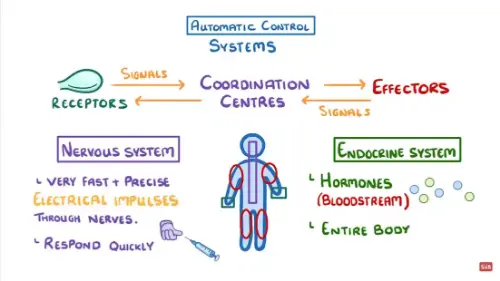
The endocrine system is purely a chemical reaction, but it still controls our body. This is in contrast to the nervous system, which is an electrical impulse network.
There are several components that affect us with hormones. They include:
Let's take a look at each one.

The piuitary gland creates several hormones, usually in response to the body conditions, such as blood water levels. It is deemed as the main and most important gland in the endocrine system.
The pituitary and hypothalamusA part of the mid-brain, and based next to the pituitary gland. work together to keep a balance within the body, and also stimulate other organs or glands to help control the body.
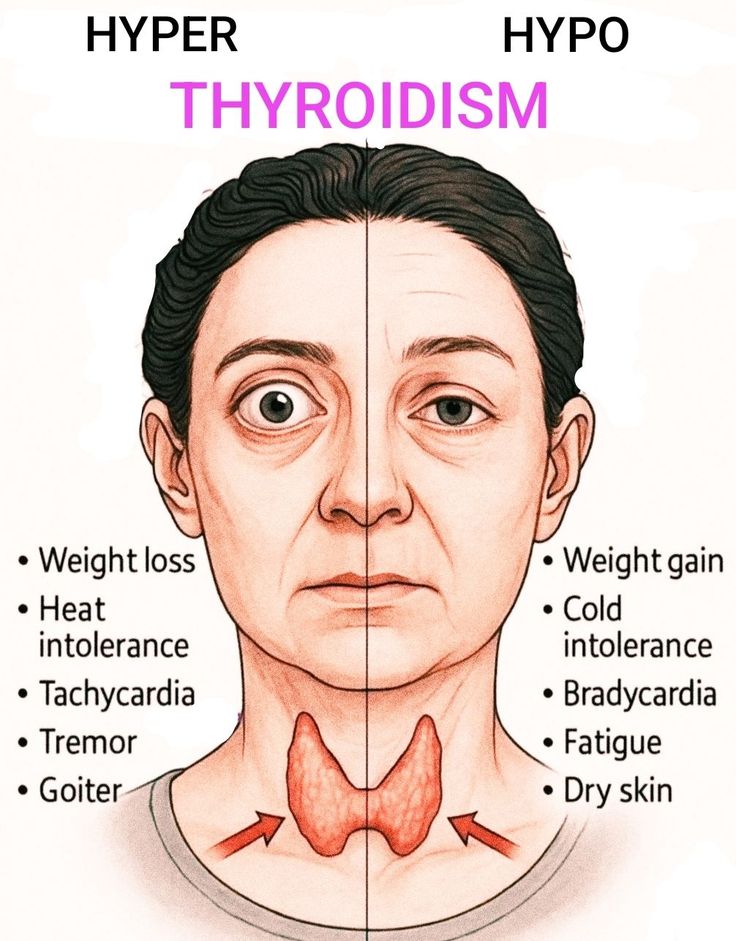
A thyroid gland will secrete the hormone thyroxine. This is to control your metabolismA set of life-sustaining chemical reactions.. There are two types of thyroid disease that people can suffer from:
Hypothyroidism: this is the underactive thyroid. It is where there is a lack of thyroxine being created or secreted. It can be maintained by use of medicinal drugs to allow the creation or secretion of the hormone.
Hyperthyroidism: this is the overactive thyroid. It is where too much is secreted or created. Again, this can be controlled by use of medicinal drugs to help slow the release of the hormone.
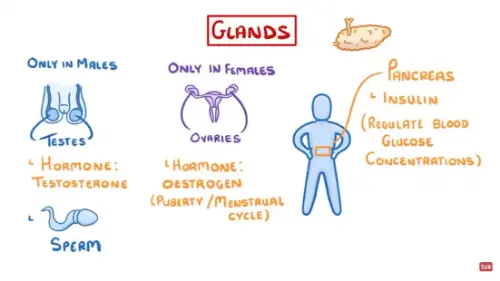
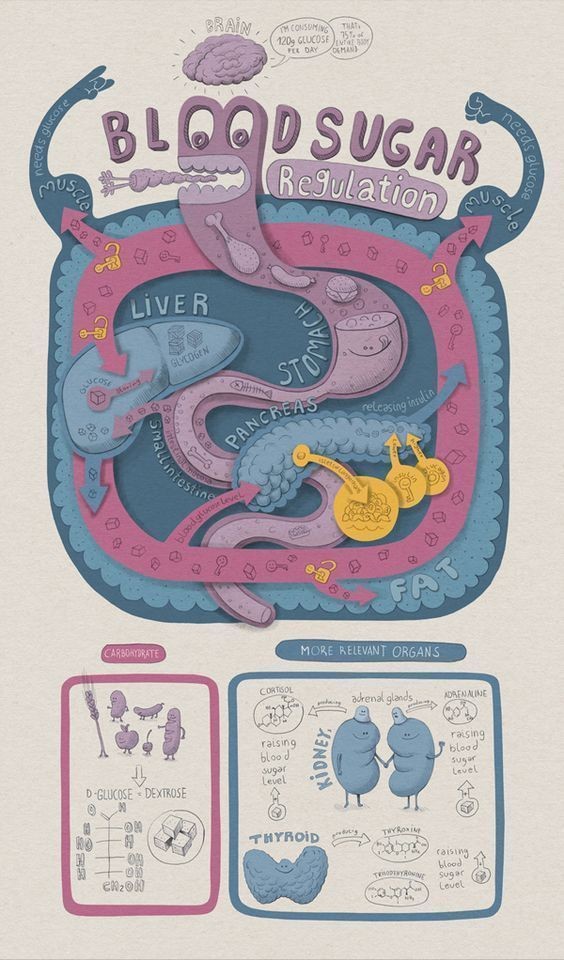
The pancreas has many features. It releases insulin and glucagon into the body to help regulate the sugars in your body. It is closely linked to people who have Diabetes. It also houses enzymes to help with digestion of food.
Adrenaline is created by the adrenal glands. So, when we get excited for something, this is what happens. Adrenaline is released from the gland so that we get that heightened sense of thrill. They are located just above the kidneys.
The testes release testosterone, which helps in production of male features during and post-puberty. It also helps at the foetal stage of pregnancy with the baby to make the male reproductive organs.
The ovaries create oestrogen and progesterone, which are the two main hormones in the female reproductive system. They help control the female puberty, and various other moments such as pre-menopause and menopause.

The reason a male's testicles are stored outside the rest of the human body is to preserve the sperm created. They are stored at a temperature at least 2 centigrade less than the body, making it an optimal temperature for the best results while reproducing.
The following still is from a video on the endocrine system, with the following details:
Please click on the image to view the video.
Thermoregulation centre, brain, automatic control, body temperature, heat, cold, shivering, sweating, vasodilation, vasoconstriction, erector muscle.

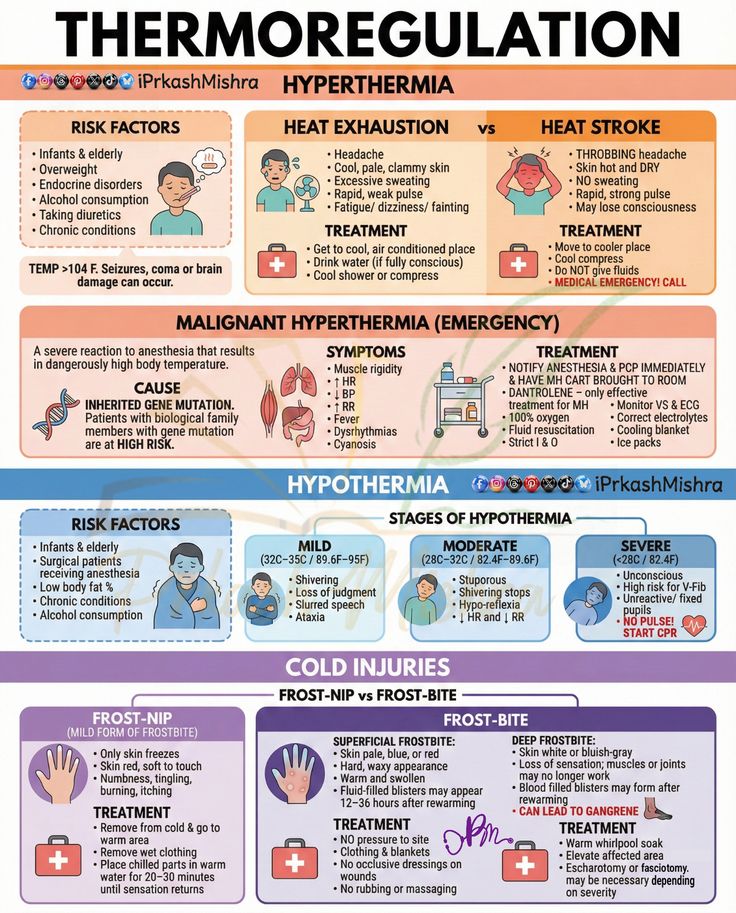
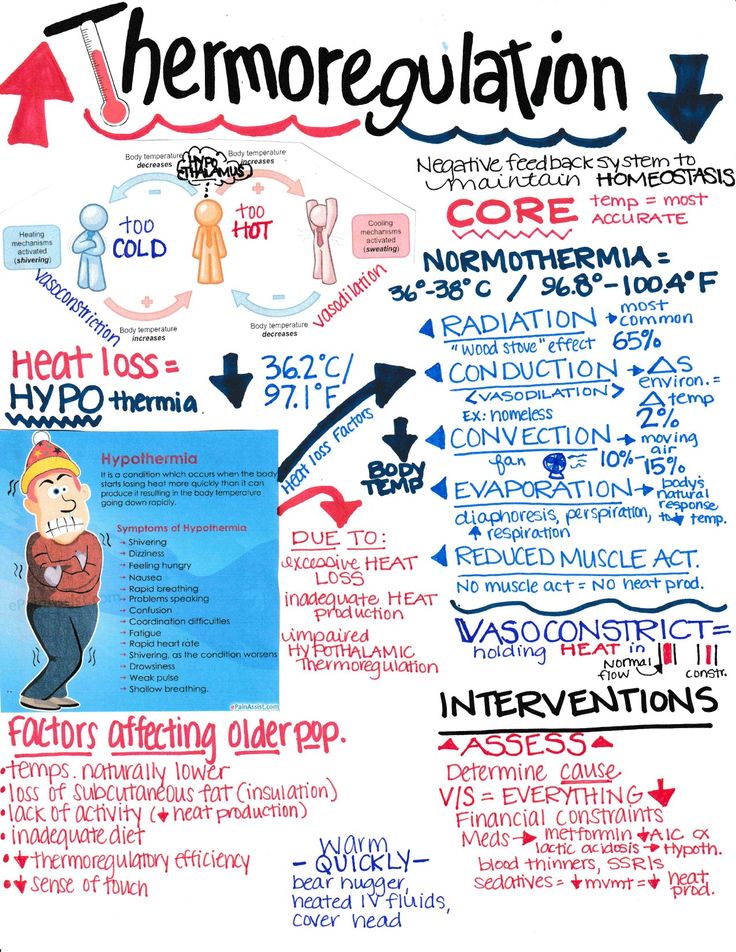
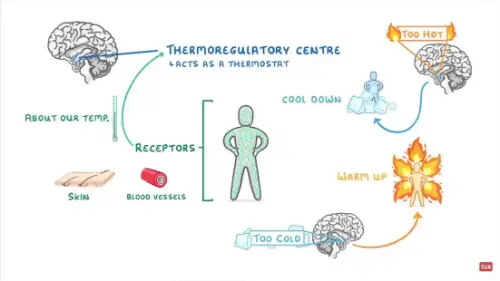
When it gets hot, or when it gets cold, our body reacts to it naturally. We have an automatic control centre that helps our body temperature maintain itself at around 37° Celcius. But why? What is the point of staying at this temperature, and what happens when our body goes above or below this temperature?
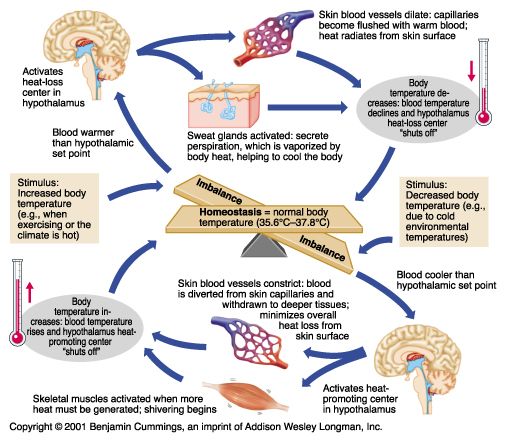
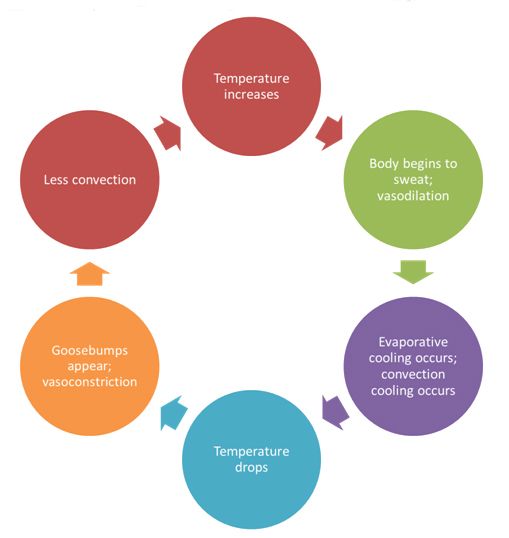
Let's take heat for our first example here. When we get hot, what happens? You want to strip some clothes off (please, not all of them!), but also, you end up sweating. This is a response of your thermoregulatory centre that tells your body to secrete water and salty solution on to your skin. This then makes you cool down, because the water content is evaporated. The salt content then helps to cool you down.
When this happens, and your body is hot, your blood vessels get smaller. This is known as vasoconstriction. Like your eyes when they dilate (the pupils get bigger), your blood vessels (arteries and capillaries) can also become bigger. Here's a bit of physics for you: if you have a larger area in your body where heat is given out, it will take less time to cool down. Without this response from your circulatory system, you will remain hot for longer.
Yes, in effect. When your body gets cold, your thermoregulatory centre reacts to it, by making you shiver. This is when your muscles contract quickly to enable your body to create a shock of energy through the process of respirationGlucose + Oxygen  Carbon Dioxide + Water (+ Energy), which in turn warms you up. Of course, when you are cold, you most likely put on some more clothes like a jumper or coat.
Once again, your circulatory system gets involved with this issue as well. When we need to warm up, our blood vessels become constricted. This means that close to the skin, the blood vessels become smaller. This process is called vasoconstriction. It just means that there is less blood near the surface. When you're cold, you'll notice it by your fingers and toes going white. This is a normal response, and eventually means that you will warm up.
Another thing that happens when you're cold is that you will get goosebumps and your hairs will stand on end. This again is a natural response. This is because you have little muscles called erectors that contract and push up your hairs on end. This allows heat to be effectively trapped around our skin which then allows us to heat up a little.
The following still is from a video on the body temperature, with the following details:
Please click on the image to view the video.
When a person dies, their body decreases in temperature by 1.5 degrees an hour. This is how we know how long roughly someone has been dead for during examination close to the time of death. Other signs then take over, like rigor mortis and decay.
Well, put simply, it is an automatic control centre, and is linked to homeostasis, which is a series of control centres that help regulate your body in different methods. They all interact with the brain to make light and efficient work of your regulated and automatic responses to the environment around you.

Homeostasis, balance, regulation, conditions, body, temperature, water content, blood sugars, insulin, metabolism, hormones, mood, negative feedback, anaerobic, respiration.
Homeostasis is the continual process where your body is completely balanced. A series of glands and organs work together to maintain this balance, and they maintain everything about your body.
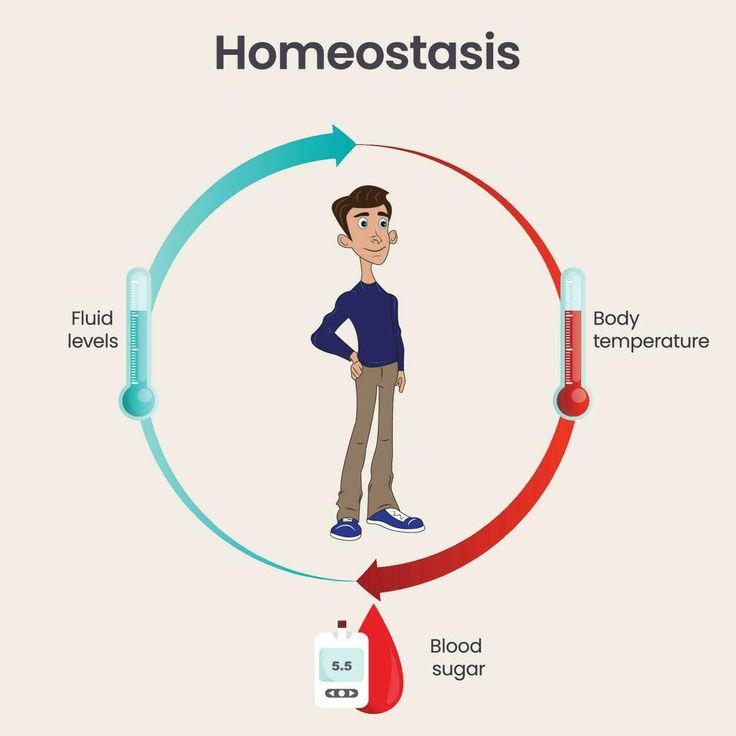
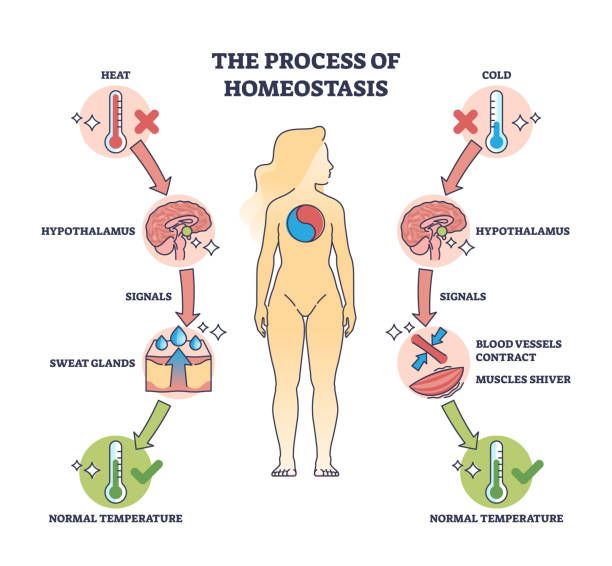
Homeostasis maintains, regulates and controls almost all of your body, including:
The following still is from a video on homeostasis, with the following details:
Please click on the image to view the video.
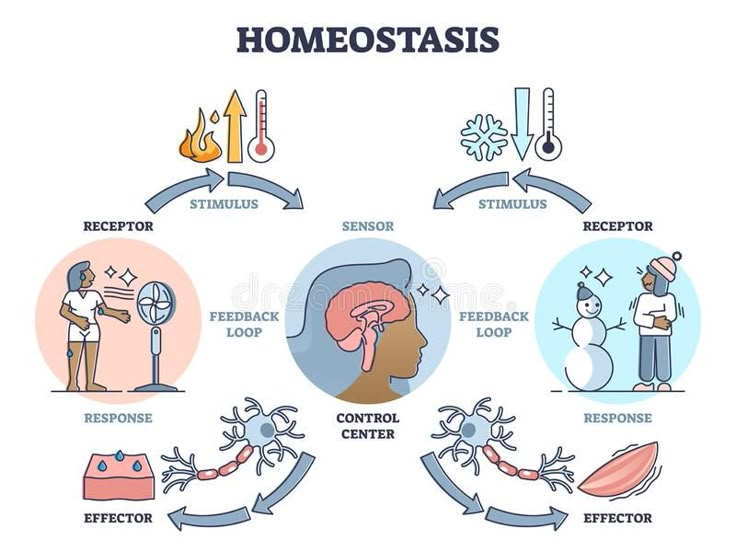
Our body needs to be at an ideal temperature of 37°C. This is so the enzymes in our body can work at their optimum levels to create energy.
Your body needs a constant source of glucose for respiration. This is controlled by homeostasis, and it controlled by insulin, a hormone that controls the release and storage of the sugar.
Your body is naturally 80% water-based. The controls that maintain this do so to make sure that you have enough and not too much water in your body at any one time. There are conditions where you will realise you do not have enough water, because your mouth will be dry. We constantly lose water from:
All of these controls sounds like a lot of rules to follow, which is fine, but how does our body do it?
There are a few mechanisms that help, and they are all called negative feedback. They work by a simple balance scale. Let's imagine an actual old-school style set of scales. They need equal weights on either side to maintain balance. If one of the sides of the scales goes up, you need to place something on it to bring it down. Likewise on the other side.
Negative feedback works by the same method. If a level of something increases, the control systems in your body reduce it to the acceptable level. If the level of something decreases, the control systems in your body increase it.
So for example, if we are cold, generally we will go and put a jumper on. But naturally, when we feel cold, and you shiver, your muscles are contracting quickly. To combat this, your body releases energy from your reserves through respiration, more specifically anaerobic respiration.
When we are too hot, generally, you will remove clothing to help cool down, but our body uses the sweat glands to produce sweat, and this evaporates from our body to remove heat from the skin.
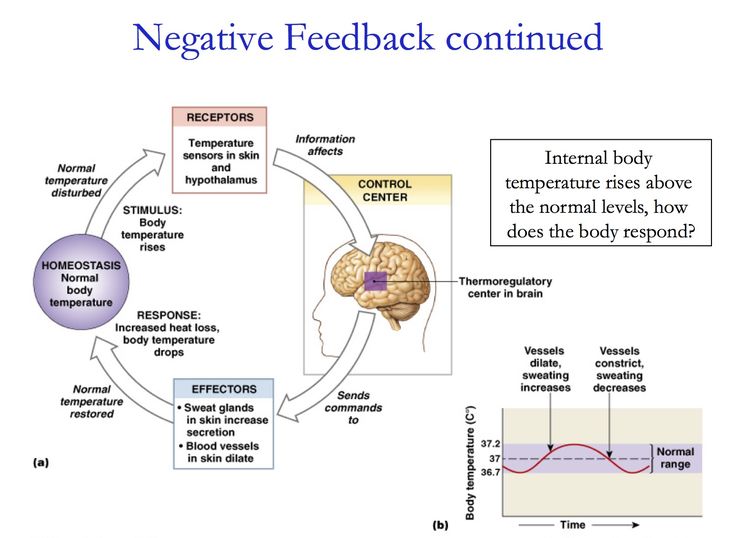
Homeostasis works on all levels of an organism: the cells, tissues, organs, systems and the organism itself. It maintains a complete balance of your body, and if something is not working properly, it will usually make you aware of it.
Well, many reasons really.
If you're walking down a road, and you faint, it cold be because your homeostasis is not working properly. This could be due to a lack of water content in your body (you've not drunk enough water in the day!) and can then mean you feel light-headed. Or, you might feel really sleepy as you have no energy. This is the result of low blood-sugar levels (go eat a banana!).
Other reasons include your long term health. Without certain aspects being looked after, you could end up in hospital as a result of homeostasis not working properly. It can also mean that organs around your body may stop working.
Diabetes, diet, insulin, Type 1, Type 2, injection, pump, medication, tablets, pancreas, hormone, islet cell transplant, blood sugar monitor, hyperglycaemia, hypoglycaemia, memory loss, rapid acting, regular acting, long acting, synthetic, pig pancreas, cattle pancreas.
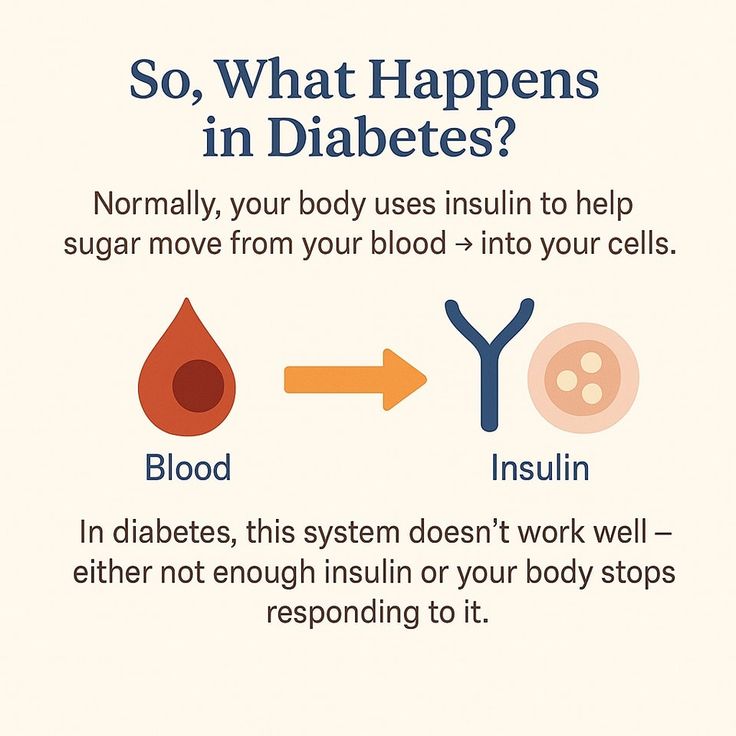
Diabetes is a lifelong condition that can cause a person's blood sugar level will become too high. When this happens, your body cannot produce enough insulin, a hormone that controls this sugar level. If it goes any further, the body's immune system attacks the cells that create insulin and destroys them.
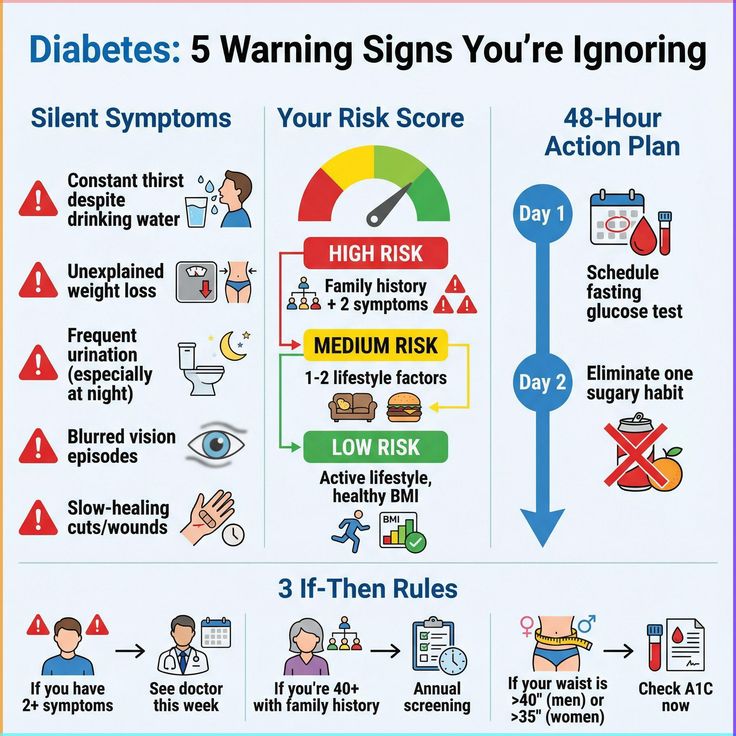
There are two main types of diabetes.
As a rule, there are more people that have Type 2 diabetes than Type 1.
There are also some other types of diabetes, including gestational diabetes, where a pregnant woman does not create enough insulin, and pre-diabetes, where people may have a higher concentration of blood sugar, but where it is not high enough to be diagnosed as diabetes.
So, we know that it's controlled by insulin. This is created in the pancreas, which is situated behind the stomach. The process is where insulin is taken from the food we digest and placed in your bloodstream where it is broken down to create energy.
If you have diabetes, this process doesn't occur, and this is because there isn't enough insulin in the body to process the energy needed.
The name diabetes is Greek for "siphon", which refers to the copious amounts of urine in uncontrolled diabetes. The name insulin is from the Latin name insula, or island, because they are secreted from the Islets of Langerhans in the pancreas.
Type 1 diabetes can develop quickly. In a matter of days or weeks. It will need treatment as quickly as possible so your body can function normally. It is where your body does not make the hormone insulin, and this can be fatal if not treated soon.
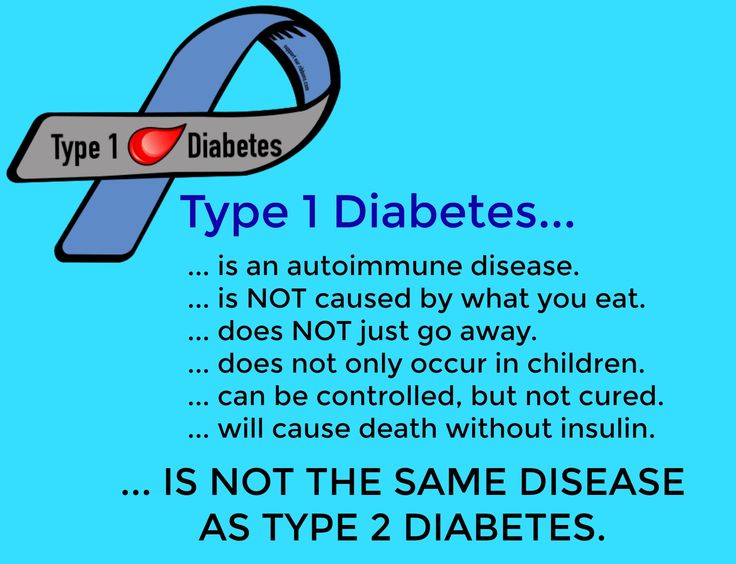
The following still is from a video on Type 1 diabetes, with the following details:
Please click on the image to view the video.
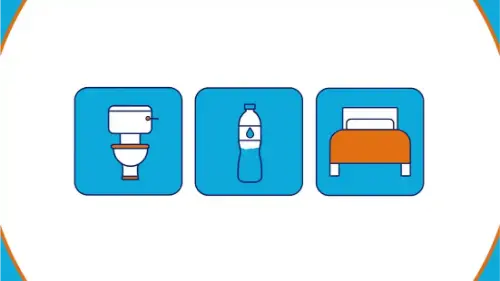
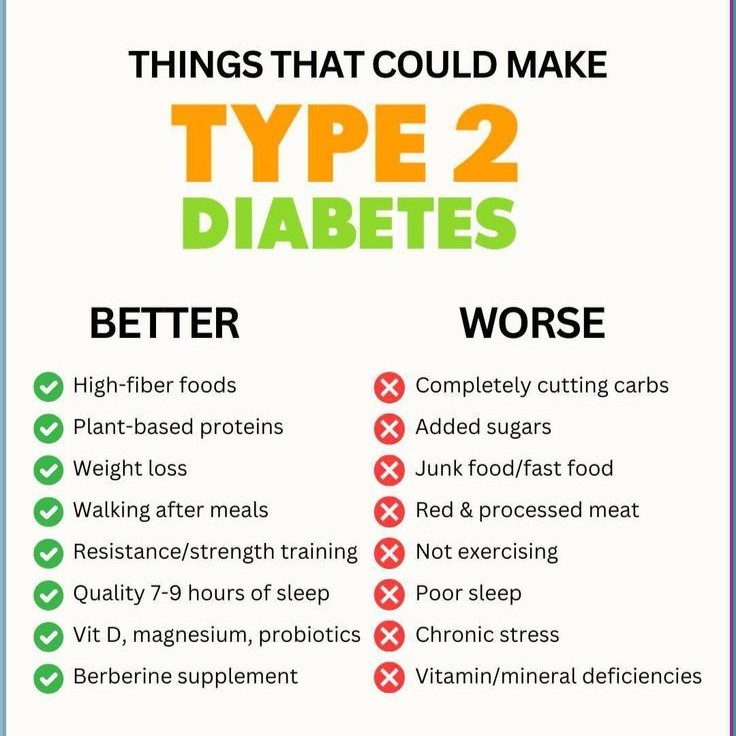
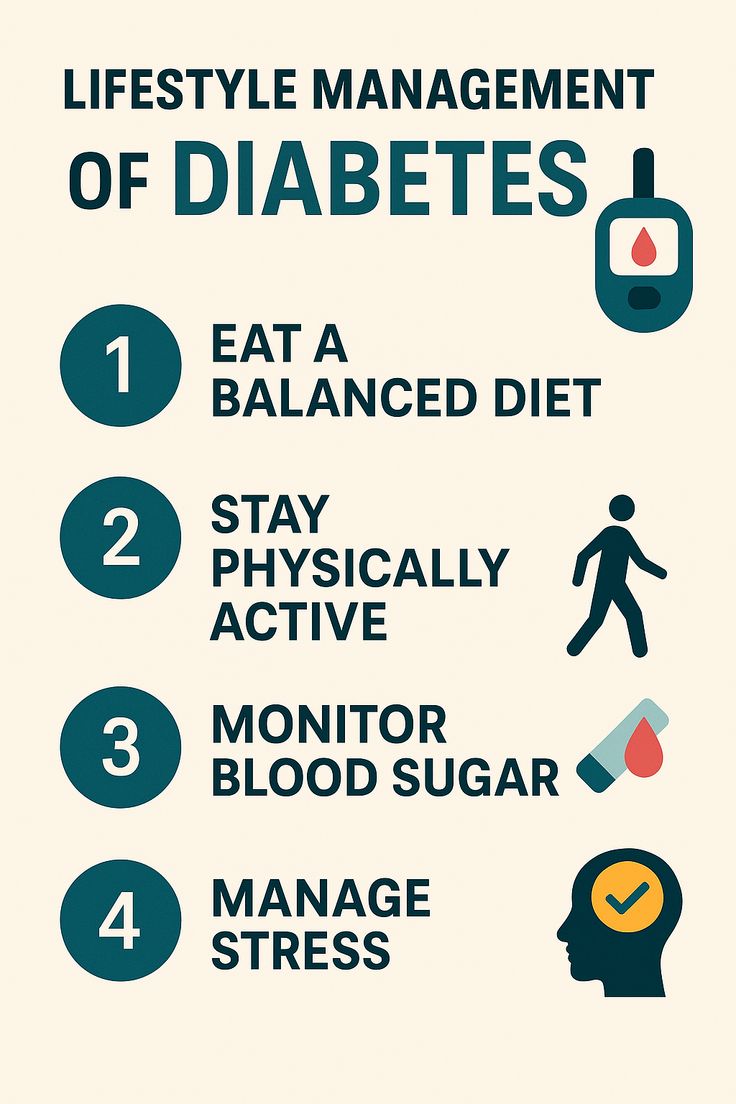
Although classed as not as severe as Type 1, Type 2 diabetes can be controlled by your diet and lifestyle. If you don't look after yourself, you can develop further into Type 1, and then you'll have to take tablets or inject yourself with insulin daily, as well as monitor your blood sugar levels.
The following still is from a video on Type 2 diabetes, with the following details:
Please click on the image to view the video.
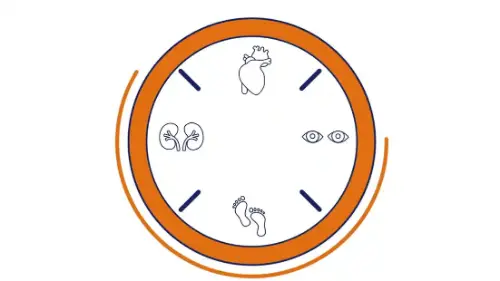
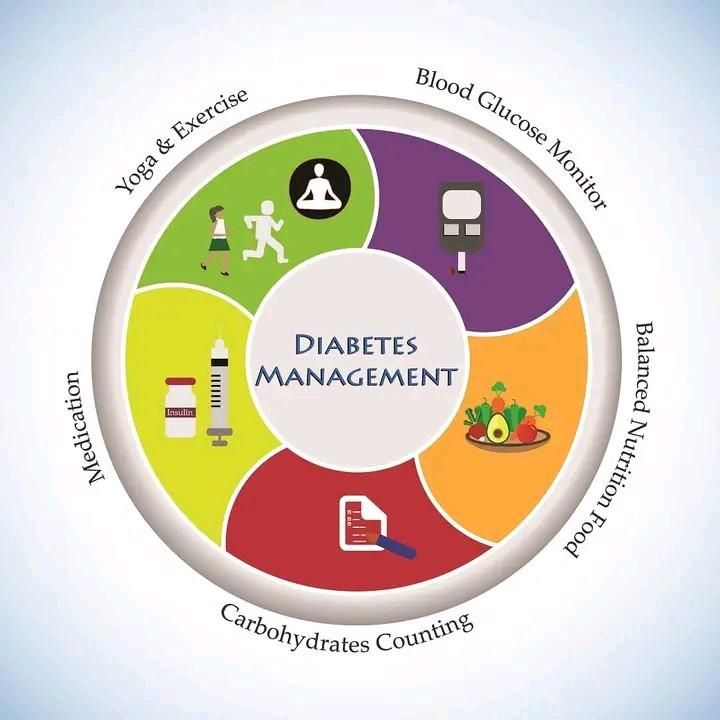
There's different ways you can treat diabetes, for both types.
For Type 1, you can:
For Type 2, you can:
Diabetes can also affect people who have low blood sugars (hypoglycaemia). When this happens, the blood is redirected to all the major organs to keep them going. This doesn't include the brain, which you would think is a major organ, so it gets left behind.
When this happens, a person with diabetes can have a serious hypo, which in turn can cause quite severe brain damage, and can result in paralysis down the left side (similar to a stroke), memory loss, loss of language use and other effects such as muscle coordination and balance issues.
There are different types of insulin that can be taken when you are Type 2. Basically when taken, they take a varied amount of time to work or release into the blood system. They include:
They all peak at varied times too, anywhere between 30 minutes and 12 hours.
There are a couple of routes for this. The pancreas of a pig or cattle were used to make insulin, and while this may not be used anymore as much, it is still a viable option if needed.
The other route is to create synthetic insulin by using recombinant DNA using two strands of amino acids. They are arranged in a structured sequence.

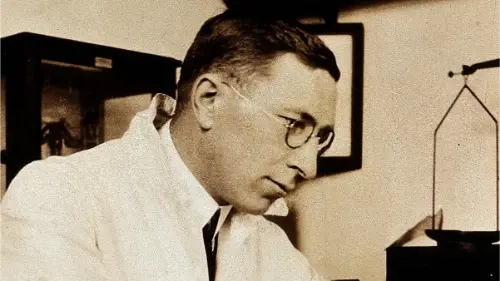
A physician that was able to isolate the hormone insulin, and helped purify it to provide treatment for diabetes.


